
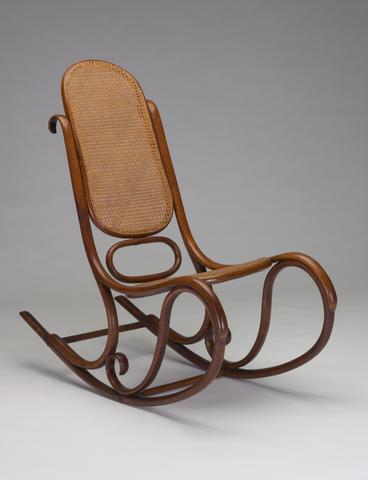
One of the strongest currents in American furniture — an effort to put the hand back into the work after decades of machine revival. Form follows function, and the furniture is built in unison with the house around it. Gustav Stickley published his Craftsman designs and catalogs; his brothers Leopold and John George built in the style; Elbert Hubbard’s Roycroft and Frank Lloyd Wright carried it further. Strongest from 1880 to 1920, the movement has never really stopped.
Design Elements
- Many pieces built in
- Oak the primary wood — left natural, fumed, or sometimes painted
- Shellac-and-wax finishes
- Copper hardware
- Straight, rarely-footed legs
- Inlay of silver, copper, and abalone shell
- Leather the usual upholstery
Styles within the movement
- Greene and Greene (1894–1950) — Pasadena architects whose “Ultimate Bungalow” designed house, furniture, textiles, and fixtures as one; celebrated exposed joinery, ebony pegs and splines, waterfall legs, and a Japanese sense of weight and line.
- Prairie School / Mission (1900–1920) — Louis Sullivan, Frank Lloyd Wright, and others; long, low, horizontal lines, geometric form, art glass and metal, the building and its furniture treated as a whole.
- Bungalow (1910–1939) — the Ultimate Bungalow’s smaller cousin; dark oak, exposed frames, minimal decoration, leather or tapestry.